Showing posts with label Pests and weeds. Show all posts

Saturday, 20 August 2016

Potato blight: what to do

The dreaded splotches
We live in an area where potato blight (officially known as late blight) is a common problem and, sure enough, our maincrop potatoes have been affected again this year. However, that is no reason not to grow maincrop potatoes. The following are good preventative measures:

  • Use certified seed potatoes with high blight resistance (Sarpo range or Setanta).
  • Start early in the season (if you sow early the tubers should already be a good size when the blight hits).
  • Grow some extra since the final tuber size might be smaller than expected.
  • Practise crop rotation.
  • Remove any rogue potatoes that pop up from the previous year's crop and avoid composting potato peelings.
That's all the plants removed from the tattie patch

From July onwards, watch your potato plants like a hawk. Ideally, monitor them daily. If any of the tell-tale brown splotches appear, act straight away. Don't wait for all the plants to become affected. The tubers will be fine if the foliage is removed immediately; they just won't grow as big as they would have otherwise.

If blight strikes:
The burn pile
  • Cut down all potato haulms (or shaws, as we call them in Scotland).
  • Burn the foliage.
  • Cover the potato patch with mulch or earth up and leave the tubers in the ground for three weeks (this allows for the skins to harden and the fungal spores to die off).
  • Regularly inspect your stored potatoes for any sign of rot.
Setanta maincrop - the tubers are fine

Sunday, 19 June 2016

Slug menace: Part II. Slugs indoors

We have lately found, to our cost, that slugs can be destructive to other things besides plants. Slugs and electronic components are a very bad combination.
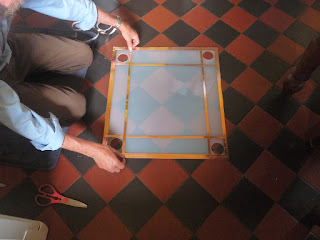
Making a tidy, low-maintenance slug barrier
It all started about a year ago when our dishwasher blew up one morning. Pressed the button to power it up and BANG! Smell of burning electrics. Dead washing machine. The engineer who came to repair it found the main PCB (printed circuit board - i.e. the 'brain' of the machine) blown and something, possibly a fried slug, on its surface.

Bad luck, we thought, but then, nearly a year later, exactly the same thing happened again.

There's just no way of avoiding the occasional slug in the house out here. The main importer appears to be one of the cats, who brings them in on his tail. Why do the slimy little swines seem to be drawn irresistibly to the inner workings of the dishwasher? It must be that their keen sense of smell pulls them towards particles of food within the machine. I wonder if the green colour of the PCB has anything to do with it?

Anyway, I was determined that this should not happen again. The first approach that occurred to me was to strew some rock salt underneath the machine. Duly done. But, considering further, I realised that might not be the best solution.

For one thing, salt is highly hygroscopic. That is, it draws moisture out of the air. So I wondered how long it would take the crystals lying under the dishwasher to 'melt' and how much of a mess that would create.

What a mess!
Next morning, I pulled the machine back out and sure enough, most of the crystals had already dissolved in atmospheric H2O, leaving tiny pools of strong saline solution all over the floor. Not only that, but the salt had claimed its first victim: a marauding slug, which was exaquanated and lay there like a deflated balloon.

Of course, slugs and the means of repelling them have been much on our minds recently, so I soon realised that copper tape was the better answer. First thought was to apply the tape directly to the floor tiles, but that probably wouldn't have worked so well with sliding the feet of the machine over top, to get it back in its slot.

Functional and attractive
Hence, I give you the Slug Defender MkI. A piece of sheet plastic cut to fit neatly under the machine, with holes for the feet (keeping it in position when the machine is moved) and an attractive Art Deco grid of slug-repelling copper tape applied to the top surface.


Slugs not welcome here

We didn't have long to wait for confirmation of its effectiveness. On each of the following two mornings I've found a fresh slug trail leading from the cat mat over towards the dishwasher. The beasts then probed their way around the perimeter of the Slug Defender before shearing off and finding a stray salt crystal in the corner that finished them off.

Wednesday, 15 June 2016

Gardening with cats and chickens

Destructive, nous?
Although cats are a gardener's friend in some ways, mainly through eliminating hungry rodents, they can also be destructive. The main problem with felines and gardening is their litter box habits: they like to dig and cover over their deposits, disregarding any seedlings or plants in their way.

Another issue is accidental damage while playing hard: a wild chase through the broad beans, wrestling in the chard.

Cat-protected heathers
When we planted our heather slope we soon found several specimens had been unceremoniously covered over with earth. Since we'd just dug up a lot of old slate roof tiles they immediately got redeployed, making a stylish cat protection barrier around the heathers. This has proved very effective - and it's suppressing weeds and keeping in moisture, too.

Previously a litter box

If you're planting out small seedlings protection is easy: surround them with a bottomless plant or yoghurt pot, put an upside-down wire or hanging basket on top or use glass cloches.

It's a bit trickier when you're sowing direct. In a raised bed you can net over the entire bed: simply pop in some hoops and peg down the netting over top. Otherwise we haven't come up with anything better than using string at cat height along the row. This marks the row and makes it a bit inconvenient for cats to stop for a comfort break. The string has to be quite taut.

String along a row - a bit higher than ideal
Besides protecting individual plants, you should also provide an approved spot where cats can relieve themselves. Ideally near the house and the cat flap. Any freshly dug soil will be investigated. With a bit of luck, they will mainly go there, but out on patrol anything goes...


Chicken snack
If you thought cats were a nuisance in the garden, try free-range chickens! Not only have they got wide ranging appetites (rose petals and apple blossom, berries and leaves of all sorts), they also scratch the soil everywhere they go. They will dig out small plants and bulbs and devour even quite sizeable ones if they are tasty. We've known them to decimate our neighbour's rhubarb patch.


Contemplating the raspberries
Chickens should be kept out of the vegetable garden and away from your soft fruit. That's what chicken wire is for! They can have the mouldy or slug-damaged strawberries and fusty raspberries, but that's all.

If you have to plant anything in the chicken area, think cages. Make a simple wire cage to net over or use chicken wire in a creative way.


Woodruff behind chicken wire
Cages and netting over tea bushes

The absolute minimum is surrounding your plant with large stones to stop the chickens scratching there. This might be enough for bulbs, but if there's any delicious greenery showing added protection is needed.

The good thing about chickens, at least, is that they eat quite a lot of pests as well and provide fertiliser free of charge. The grass in their area is definitely greener!


Thursday, 9 June 2016

The joy of mulch

Mulched potatoes
Nothing goes to waste in our garden, least of all grass clippings. They make a fantastic mulch that can be used in many places: under hedges, around potatoes and other large vegetables, around fruit trees/bushes and to prepare new areas for cultivation.

Mulching has several benefits:
  • It suppresses weeds.
  • It retains moisture.
  • It provides a slow-release fertiliser. 
To mulch, simply put large wads of glass clippings around the plants, making sure not to touch their stems/trunks. The ground should not be visible. The mulch will break down over time and needs topping up periodically.

Mulch around the brassicas and squashes
We mulch our hedges two or three times a year, same with our fruit trees and other trees that we want to give a boost by suppressing competition and adding nutrients.

After earthing up the potatoes once we put a thick mulch around the plants; this is topped up regularly to keep those tubers well covered.

Elsewhere in the veg garden, we mulch around all the bigger plants that are well spaced out - all the brassicas, squashes, artichokes, sweet corn and celeriacs etc. - and inside the wigwams for beans and peas. It's not practical to use mulch around smaller, tightly spaced plants such as onions, carrots and beetroot - so more weeding is necessary there, sadly.

Mulch is also useful if you want to prepare an area for planting the following year and kill off the weeds in it. For larger areas we use black plastic covers, but for inconveniently shaped areas, maybe with plants already in it that you'd like to keep, mulch is the easiest.

Simply the best way to get rid of all those grass clippings!

Tuesday, 7 June 2016

Slug menace: a five-pronged approach

Slugs and snails can completely devastate your crops with their voracious appetite for most things green. If you’re not prepared to kill them you might as well not bother growing vegetables. Best to hit them early in the spring before they multiply madly, so that your seedlings can grow in peace.


Habitat for slug eaters

1. Encouraging slug-eating wildlife


Lots of animals eat slugs: blackbirds, thrushes, frogs and toads, hedgehogs etc. Make your garden attractive to them by planting hedges and plants they like and by having a wildlife pond for amphibians to spawn in. 


2. Copper


Copper on cabbage
Copper gives gastropods an electric shock when they touch it. You can buy copper rings to protect your seedlings, but we use copper tape around a three-litre pot; it’s a lot more economical when you have hundreds of seedlings! If you have spare old copper piping lying around, you could open out and flatten this and tack it around the tops of your raised beds.


3. Beer traps


The dangers of alcohol
Gastropods love the smell of beer and follow it to the point where they drown in it (not the worst possible death, surely). You can make your own or buy them ready-made. We use the nicely designed and very effective Slug X. Fill with the cheapest beer you’re prepared to drink (there always seems to be a drop left over) and leave in infested areas. One fill will last about four nights and you can move the traps to a different spot each night.

4. Nightly killing sprees


The most slugs and snails you’re ever going to despatch in one go is in killing sessions at dusk after a rainy afternoon. Use your preferred method (stab with a sharp knife, crush with a stone or boot, drop into a bucket of boiling water...) and clear hundreds of them.

5. Slug pellets


There are two possibilities here, based on the active ingredient used. Metaldehyde-based slug pellets are definitely toxic to wildlife, pets and children, so if you use them at all, do so with caution and sparingly. They can be useful in areas where wildlife, pets and children don’t stray. We have been known use them on the inside perimeter of the greenhouse and polytunnel in early spring before we plant out in earnest.

More recently, we heard about iron phosphate-based slug pellets, which are recommended for use by 'organic growers'. As with seemingly everything else, when you dig around online, you find dissenting voices. There are claims around that iron phosphate-based pellets are not as non-toxic as the manufacturers would have us believe, particularly in the case of earthworms. There does seem to be a general consensus that they are at least safer than the metaldehyde-based pellets and therefore likely to be the better choice for cautious and sparing use.